Designing a Holistic Path to Pain Understanding
Designing a Holistic Path to Pain Understanding
Designing a Holistic Path to Pain Understanding
A digital health experience that helps users understand their pain and take control of their well-being
A digital health experience that helps users understand their pain and take control of their well-being
A digital health experience that helps users understand their pain and take control of their well-being
Client:
Client:
Founder of 4alivio
Founder of 4alivio
Team:
Team:
Two UX Designers
Two UX Designers
My Role:
My Role:
UX Designer
Client Communicator
UX Designer
Client Communicator
Duration:
Duration:
January 2024-May 2024
January 2024-May 2024
My Contributions:
My Contributions:
My Contributions:
As the Client Communicator and UX Designer, I helped facilitate communication between the client and design team, conducted user research, synthesized findings, contributed to ideation and design decisions, and participated in usability testing to improve the final experience.
As the Client Communicator and UX Designer, I helped facilitate communication between the client and design team, conducted user research, synthesized findings, contributed to ideation and design decisions, and participated in usability testing to improve the final experience.
As the Client Communicator and UX Designer, I helped facilitate communication between the client and design team, conducted user research, synthesized findings, contributed to ideation and design decisions, and participated in usability testing to improve the final experience.
Client:
Founder of 4alivio
Team:
Two UX Designers
My Role:
UX Designer
Client Communicator
Duration:
January 2024-May 2024
Reframing Pain Through a Holistic Lens
Reframing Pain Through a Holistic Lens
Reframing Pain Through a Holistic Lens
4alivio is a mobile app designed to help people with arthritis and chronic pain identify flare-up triggers and explore holistic ways to manage their symptoms. As part of my senior capstone project, I collaborated in a team of three to create a supportive, user-friendly experience that empowers users to recognize patterns in their pain and feel more in control of their health.
Our design process was grounded in in-depth user research, allowing us to create thoughtful, accessible solutions that reflect the physical, emotional, and lifestyle factors influencing chronic pain.
4alivio is a mobile app designed to help people with arthritis and chronic pain identify flare-up triggers and explore holistic ways to manage their symptoms. As part of my senior capstone project, I collaborated in a team of three to create a supportive, user-friendly experience that empowers users to recognize patterns in their pain and feel more in control of their health.
Our design process was grounded in in-depth user research, allowing us to create thoughtful, accessible solutions that reflect the physical, emotional, and lifestyle factors influencing chronic pain.
4alivio is a mobile app designed to help people with arthritis and chronic pain identify flare-up triggers and explore holistic ways to manage their symptoms. As part of my senior capstone project, I collaborated in a team of three to create a supportive, user-friendly experience that empowers users to recognize patterns in their pain and feel more in control of their health.
Our design process was grounded in in-depth user research, allowing us to create thoughtful, accessible solutions that reflect the physical, emotional, and lifestyle factors influencing chronic pain.
The Gap in Chronic Pain Care
The Gap in Chronic Pain Care
The Gap in Chronic Pain Care
Many people living with chronic pain are unaware of noninvasive, drug-free methods to manage their symptoms. This gap in awareness often leads to frustration, reliance on temporary relief, and low confidence in their ability to take control their health.
This prompted a key design question: "How might we integrate both holistic and medical approaches into 4alivio’s treatment feature to help users make informed, meaningful choices about their pain care?"
Many people living with chronic pain are unaware of noninvasive, drug-free methods to manage their symptoms. This gap in awareness often leads to frustration, reliance on temporary relief, and low confidence in their ability to take control their health.
This prompted a key design question: "How might we integrate both holistic and medical approaches into 4alivio’s treatment feature to help users make informed, meaningful choices about their pain care?"
Many people living with chronic pain are unaware of noninvasive, drug-free methods to manage their symptoms. This gap in awareness often leads to frustration, reliance on temporary relief, and low confidence in their ability to take control their health.
This prompted a key design question: "How might we integrate both holistic and medical approaches into 4alivio’s treatment feature to help users make informed, meaningful choices about their pain care?"
Bringing Holistic and Medical Care Together
Bringing Holistic and Medical Care Together
Bringing Holistic and Medical Care Together
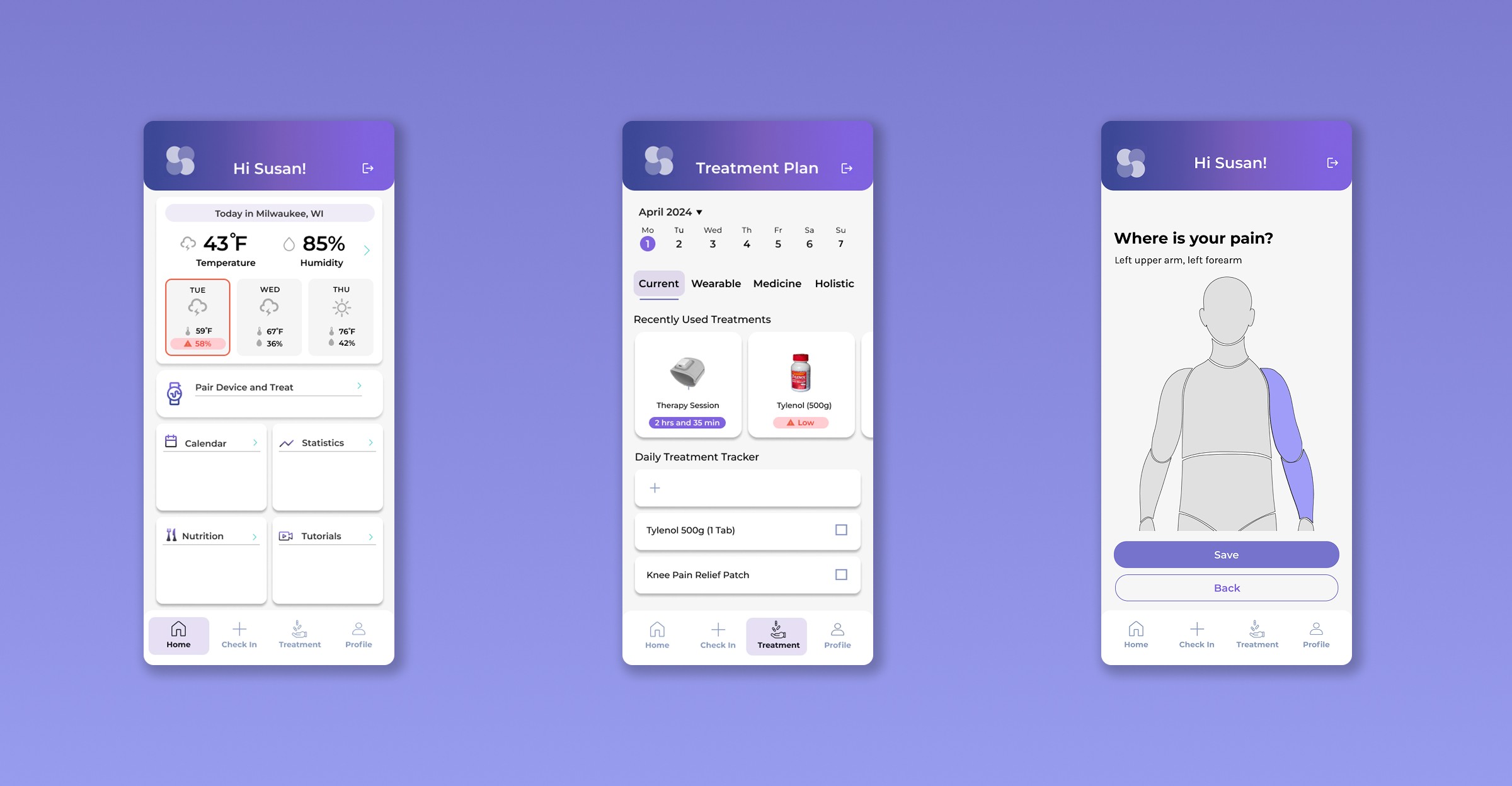
The goal was to design a treatment feature that empowers people with chronic pain to better understand and manage their symptoms through clear insights and accessible tools. My team and I focused on simplifying the interface, improving readability, and weaving both holistic and medical perspectives into the treatment feature. The result is a supportive, research-informed experience that helps users identify their pain triggers, track progress, and make more confident health decisions.
The goal was to design a treatment feature that empowers people with chronic pain to better understand and manage their symptoms through clear insights and accessible tools. My team and I focused on simplifying the interface, improving readability, and weaving both holistic and medical perspectives into the treatment feature. The result is a supportive, research-informed experience that helps users identify their pain triggers, track progress, and make more confident health decisions.
Final Prototype
Final Prototype
Final Prototype
Designing With Empathy at the Core
Designing With Empathy at the Core
Designing With Empathy at the Core
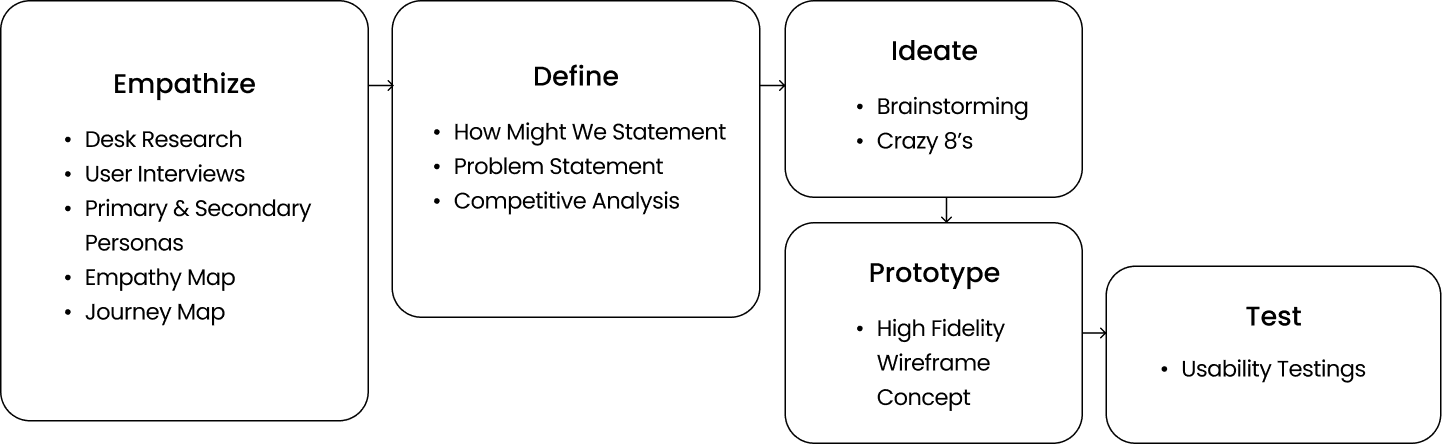
We applied the Design Thinking framework to better understand how people manage chronic pain and the challenges they face in their daily lives. This approach kept our team grounded in empathy from the start, guiding our design decisions through research, ideation, and testing to create a more supportive and intuitive experience.
We applied the Design Thinking framework to better understand how people manage chronic pain and the challenges they face in their daily lives. This approach kept our team grounded in empathy from the start, guiding our design decisions through research, ideation, and testing to create a more supportive and intuitive experience.
Understanding Pain Through Research
Understanding Pain Through Research
Understanding Pain Through Research
Working alongside my team, I conducted user interviews with individuals experiencing chronic pain to better understand their experiences, pain points, and existing management strategies. I then participated in synthesizing research findings, helping identify recurring themes that informed our design direction.
Working alongside my team, I conducted user interviews with individuals experiencing chronic pain to better understand their experiences, pain points, and existing management strategies. I then participated in synthesizing research findings, helping identify recurring themes that informed our design direction.
Working alongside my team, I conducted user interviews with individuals experiencing chronic pain to better understand their experiences, pain points, and existing management strategies. I then participated in synthesizing research findings, helping identify recurring themes that informed our design direction.
Through research synthesis, I helped identify three key insights that directly influenced our approach to the treatment experience and overall product strategy.
Through research synthesis, I helped identify three key insights that directly influenced our approach to the treatment experience and overall product strategy.
Insight #1
Users rely on prescription medication but often lack clear information about potential side effects and long-term implications.
Insight #2
Users are proactive in seeking strategies to manage their pain and related conditions, showing openness to tools and guidance that support daily care.
Insight #3
Users desire for greater control over their pain management. They expressed interest in holistic and alternative treatments but struggled to find trustworthy information.
Understanding Users Across the Pain Journey
Understanding Users Across the Pain Journey
Understanding Users Across the Pain Journey
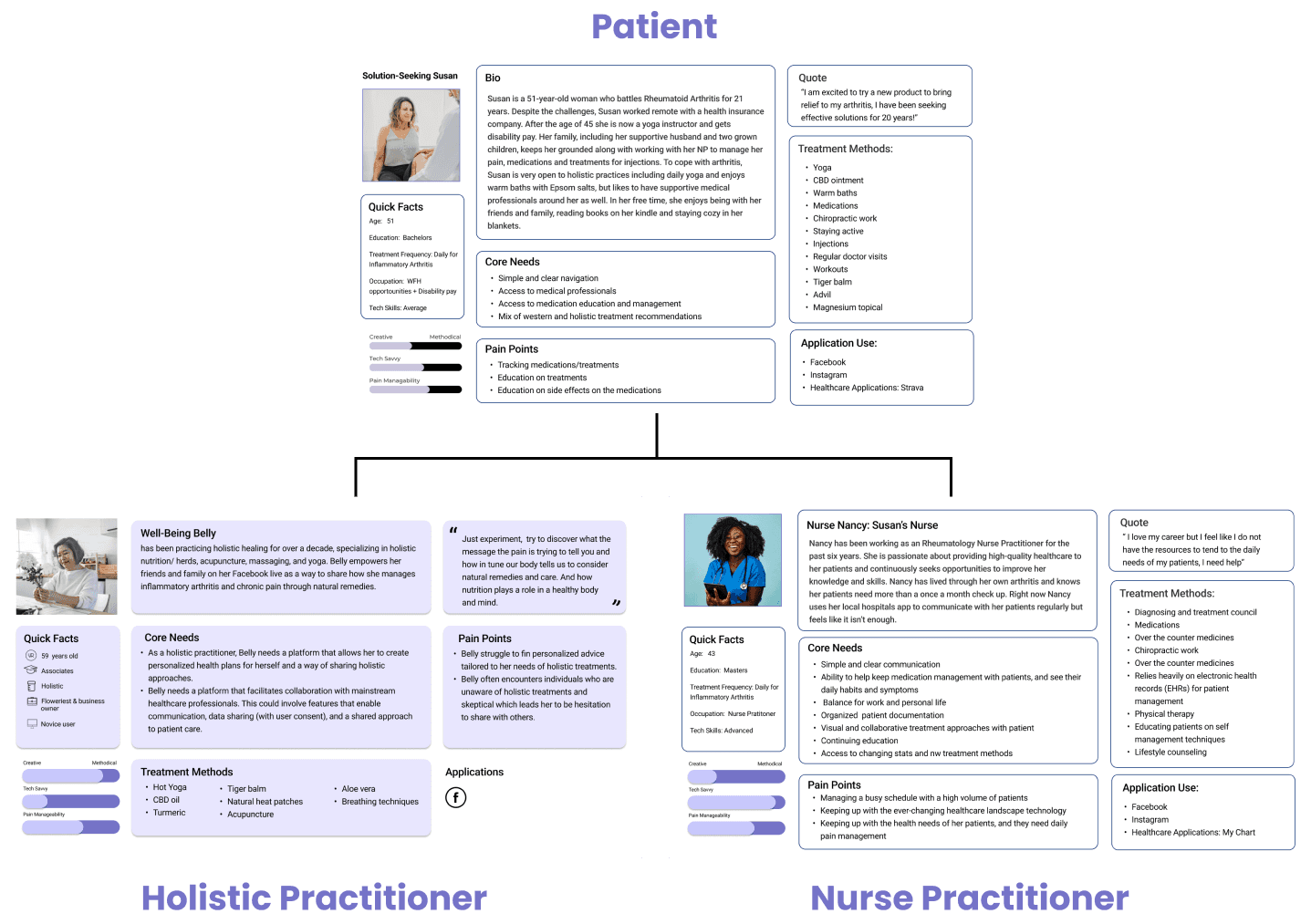
To better understand the broader pain-management ecosystem, our team developed personas, empathy maps, and journey maps that captured the experiences of patients and healthcare providers. These artifacts helped establish a shared understanding of user needs and informed future design decisions.
To better understand the broader pain-management ecosystem, our team developed personas, empathy maps, and journey maps that captured the experiences of patients and healthcare providers. These artifacts helped establish a shared understanding of user needs and informed future design decisions.
Bridging Gaps in Pain Care
Bridging Gaps in Pain Care
Bridging Gaps in Pain Care
As part of our competitive analysis, we evaluated how different apps support users in tracking and managing pain. Most competitors focused primarily on pain tracking, with only a few offering features related to treatment or symptom relief.
We also examined wearable-integrated apps such as Quell, Hinge, and Enso Relief to explore how they connect data and user experience. This analysis helped us identify opportunities for 4alivio to bridge the gap between symptom tracking and personalized, holistic care.
As part of our competitive analysis, we evaluated how different apps support users in tracking and managing pain. Most competitors focused primarily on pain tracking, with only a few offering features related to treatment or symptom relief.
We also examined wearable-integrated apps such as Quell, Hinge, and Enso Relief to explore how they connect data and user experience. This analysis helped us identify opportunities for 4alivio to bridge the gap between symptom tracking and personalized, holistic care.
As part of our competitive analysis, we evaluated how different apps support users in tracking and managing pain. Most competitors focused primarily on pain tracking, with only a few offering features related to treatment or symptom relief.
We also examined wearable-integrated apps such as Quell, Hinge, and Enso Relief to explore how they connect data and user experience. This analysis helped us identify opportunities for 4alivio to bridge the gap between symptom tracking and personalized, holistic care.

Laying the Foundation
Laying the Foundation
Building on research findings and competitive analysis insights, I participated in ideation sessions to explore potential solutions for treatment management, weather-based flare-up support, and wearable device integration. These early concepts helped shape the direction of our wireframes and prototypes.
Building on research findings and competitive analysis insights, I participated in ideation sessions to explore potential solutions for treatment management, weather-based flare-up support, and wearable device integration. These early concepts helped shape the direction of our wireframes and prototypes.
Building on research findings and competitive analysis insights, I participated in ideation sessions to explore potential solutions for treatment management, weather-based flare-up support, and wearable device integration. These early concepts helped shape the direction of our wireframes and prototypes.


Learning From Users
Learning From Users
Learning From Users
The team conducted usability testing with five participants to evaluate key workflows within the 4alivio experience. As part of this effort, I participated in usability testing and collaborated with my peers during a university event to gather additional feedback on navigation, content organization, and visual hierarchy. The insights collected helped shape refinements to the final design.
The team conducted usability testing with five participants to evaluate key workflows within the 4alivio experience. As part of this effort, I participated in usability testing and collaborated with my peers during a university event to gather additional feedback on navigation, content organization, and visual hierarchy. The insights collected helped shape refinements to the final design.
The team conducted usability testing with five participants to evaluate key workflows within the 4alivio experience. As part of this effort, I participated in usability testing and collaborated with my peers during a university event to gather additional feedback on navigation, content organization, and visual hierarchy. The insights collected helped shape refinements to the final design.
Task #1
Task #1
Based on tomorrow’s weather, use for 4alivio app to make a treatment plan.
Based on tomorrow’s weather, use for 4alivio app to make a treatment plan.
Task #2
Task #2
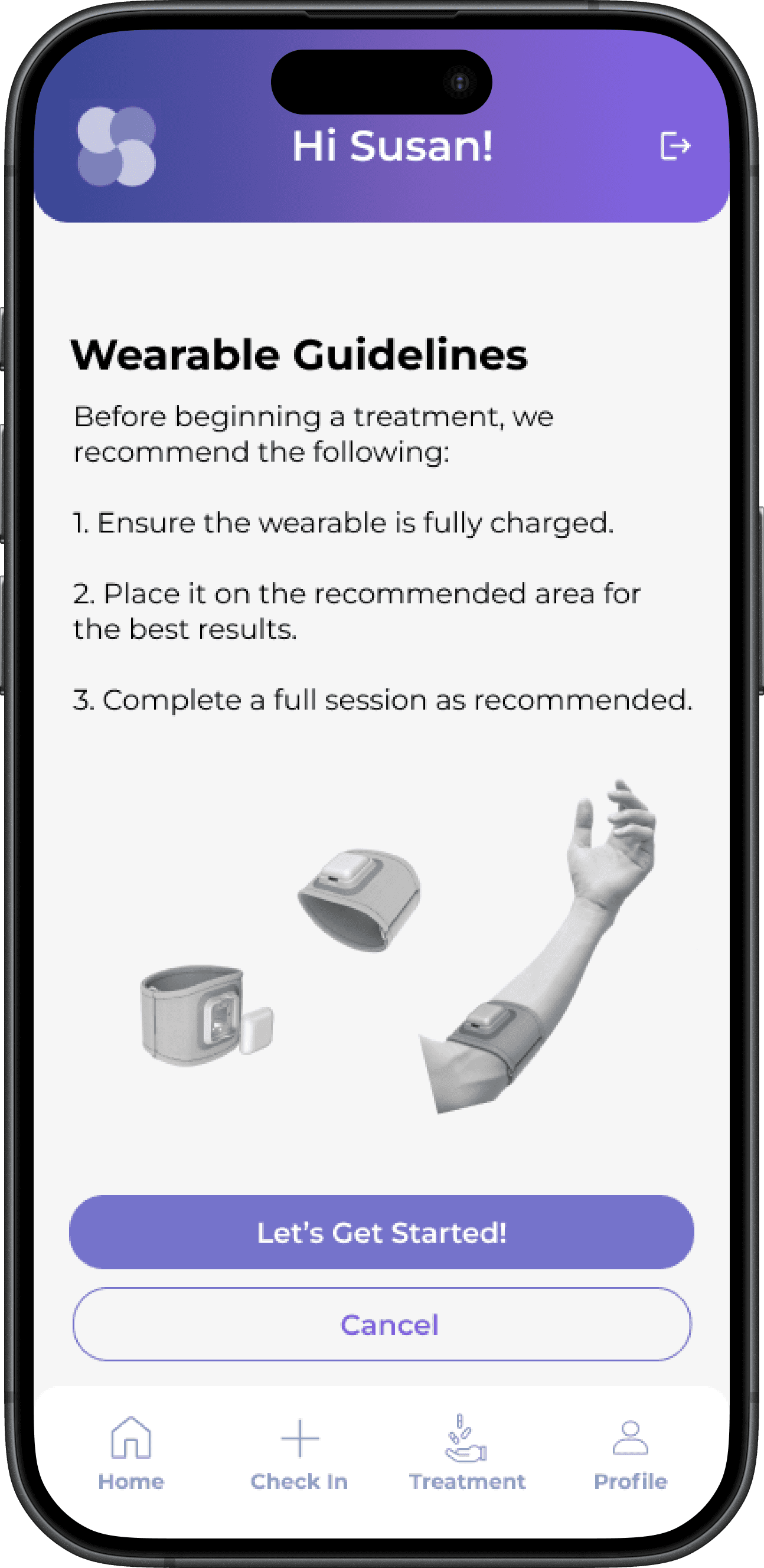
Walk through how you would set up your device and change the intensity control to your liking with completing a treatment
Walk through how you would set up your device and change the intensity control to your liking with completing a treatment
Task #3
Task #3
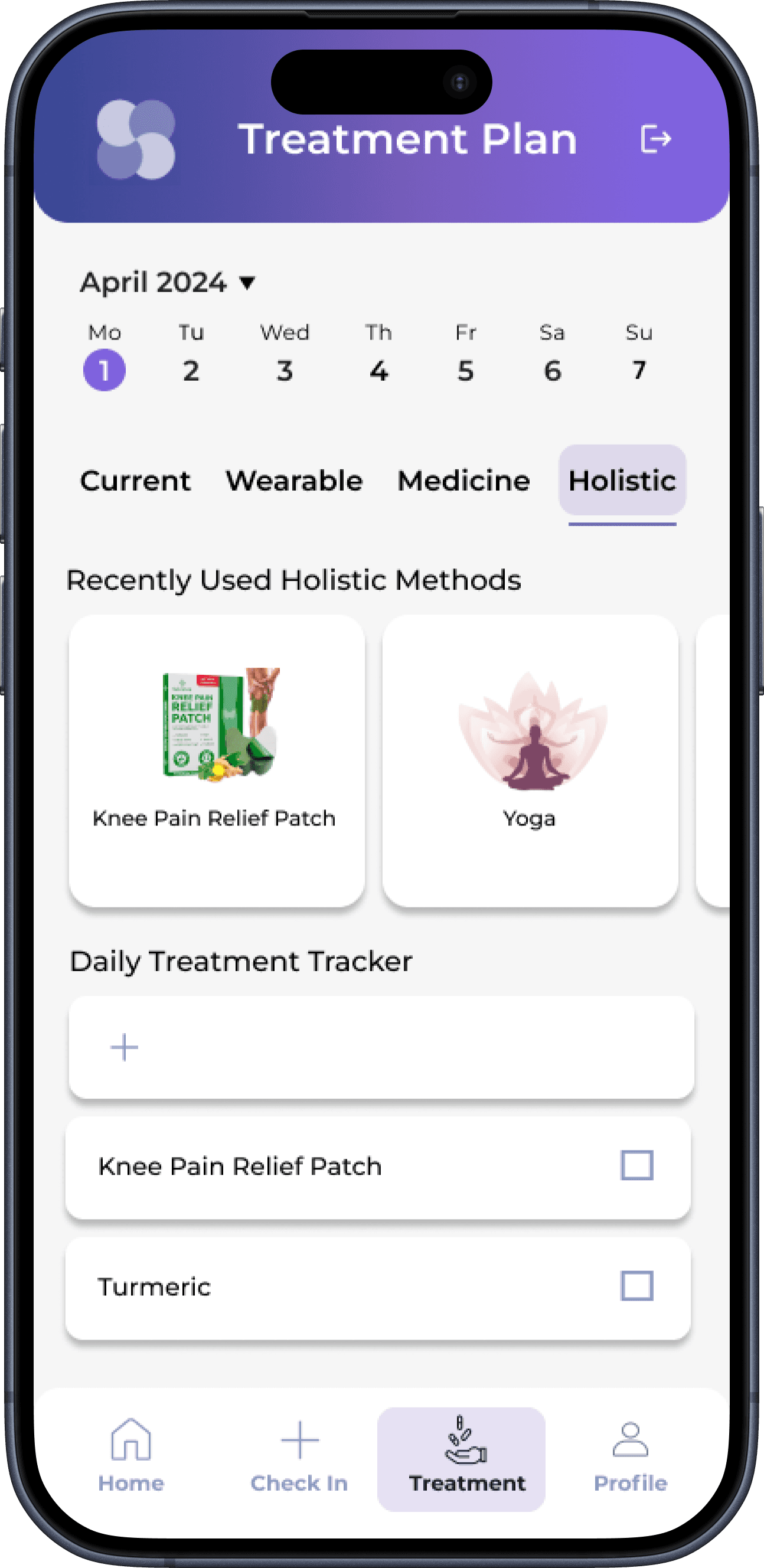
You want to explore other treatment options that won’t cause nausea. Walk me through on finding other holistic treatments.
You want to explore other treatment options that won’t cause nausea. Walk me through on finding other holistic treatments.
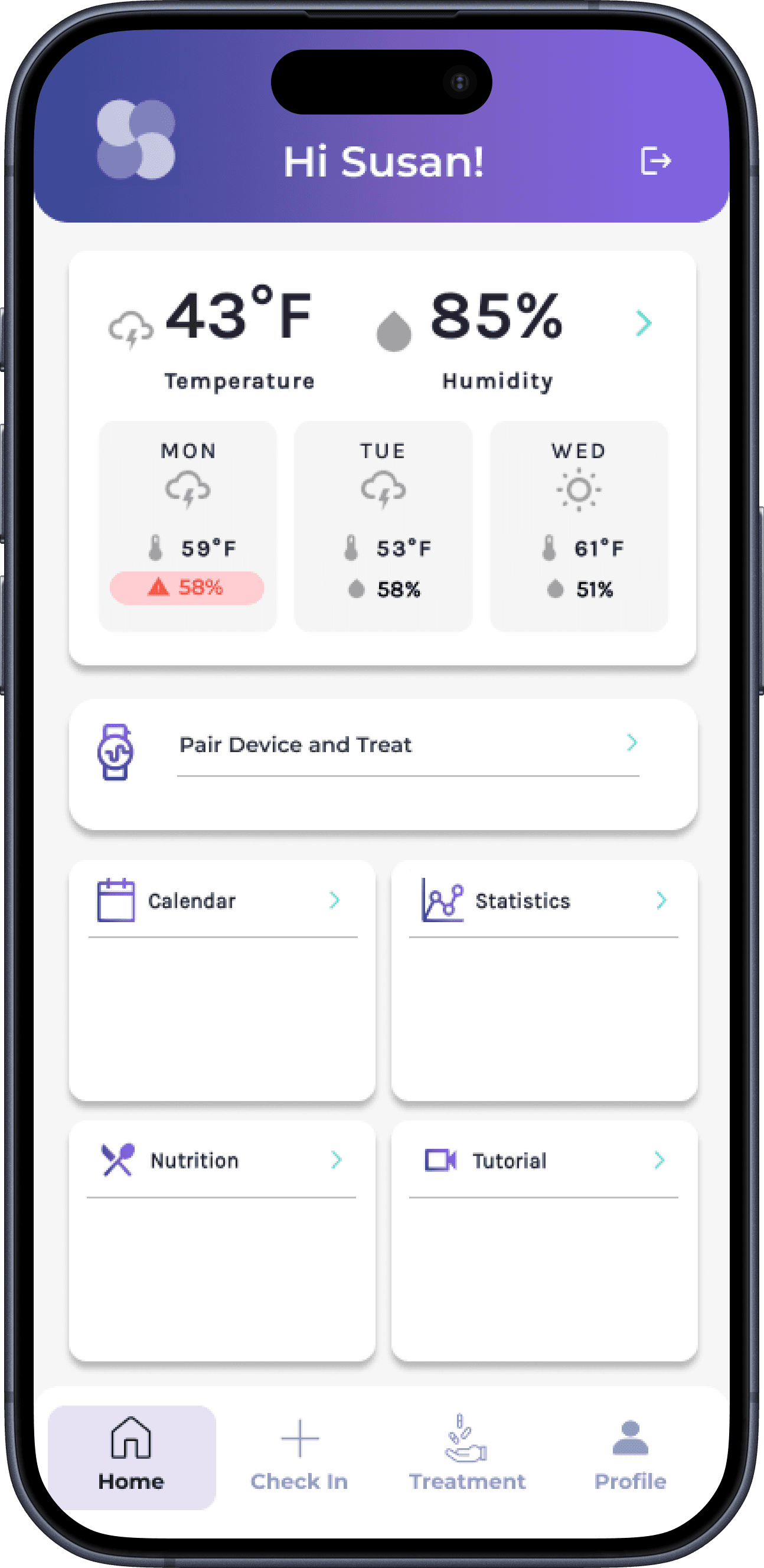
Based on participated feedback, I helped identify opportunities to improve the visibility of anticipated weather-related treatment plans.
Based on participated feedback, I helped identify opportunities to improve the visibility of anticipated weather-related treatment plans.


Through usability testing, we observed that users wanted more reassurance when completing treatment sessions, leading to recommendations for clearer guidance and safety information.

4 out of 5 users were able to navigate the holistic treatment section.
4 out of 5 users were able to navigate the holistic treatment section.
Looking Ahead
Looking Ahead
Looking Ahead
If I were to continue this project, I would prioritize integrating the Mount Mary team's design into the beta platform earlier in the process so the complete user experience could be validated through additional testing. I would also explore a rating feature to help users track the accuracy of flare-up predictions over time. Looking beyond the MVP, I'd be interested in expanding the holistic experience with community-driven recommendations for products and pain management strategies, creating a stronger sense of support while helping users make informed decisions.
Reflection
Reflection
Reflection
This project reinforced the importance of empathy and collaboration when designing for real human needs, especially in healthcare. Through research, competitive analysis, ideation, usability testing, and client communication, I learned how to balance user needs, stakeholder goals, and technical constraints to create experiences that feel supportive and empowering. Working on 4alivio also highlighted the value of integrating wearable data earlier in the design process to allow for deeper testing and iteration. If I revisited this project, I would prioritize those integrations sooner while being more intentional about delegating responsibilities across the team to make the design process even more effective. Ultimately, this experience reaffirmed why I'm drawn to healthcare UX—designing experiences that help people feel seen, supported, and in control of their well-being.
This project reinforced the importance of empathy and collaboration when designing for real human needs, especially in healthcare. Through research, competitive analysis, ideation, usability testing, and client communication, I learned how to balance user needs, stakeholder goals, and technical constraints to create experiences that feel supportive and empowering. Working on 4alivio also highlighted the value of integrating wearable data earlier in the design process to allow for deeper testing and iteration. If I revisited this project, I would prioritize those integrations sooner while being more intentional about delegating responsibilities across the team to make the design process even more effective. Ultimately, this experience reaffirmed why I'm drawn to healthcare UX—designing experiences that help people feel seen, supported, and in control of their well-being.
This project reinforced the importance of empathy and collaboration when designing for real human needs, especially in healthcare. Through research, competitive analysis, ideation, usability testing, and client communication, I learned how to balance user needs, stakeholder goals, and technical constraints to create experiences that feel supportive and empowering. Working on 4alivio also highlighted the value of integrating wearable data earlier in the design process to allow for deeper testing and iteration. If I revisited this project, I would prioritize those integrations sooner while being more intentional about delegating responsibilities across the team to make the design process even more effective. Ultimately, this experience reaffirmed why I'm drawn to healthcare UX—designing experiences that help people feel seen, supported, and in control of their well-being.
Other Work
Other Work
Other Work